Why Your Industry Needs Dexterity, Not Humanoids
Mar 25, 2026
You’ve seen it. We’ve seen it. Everyone’s seen it.
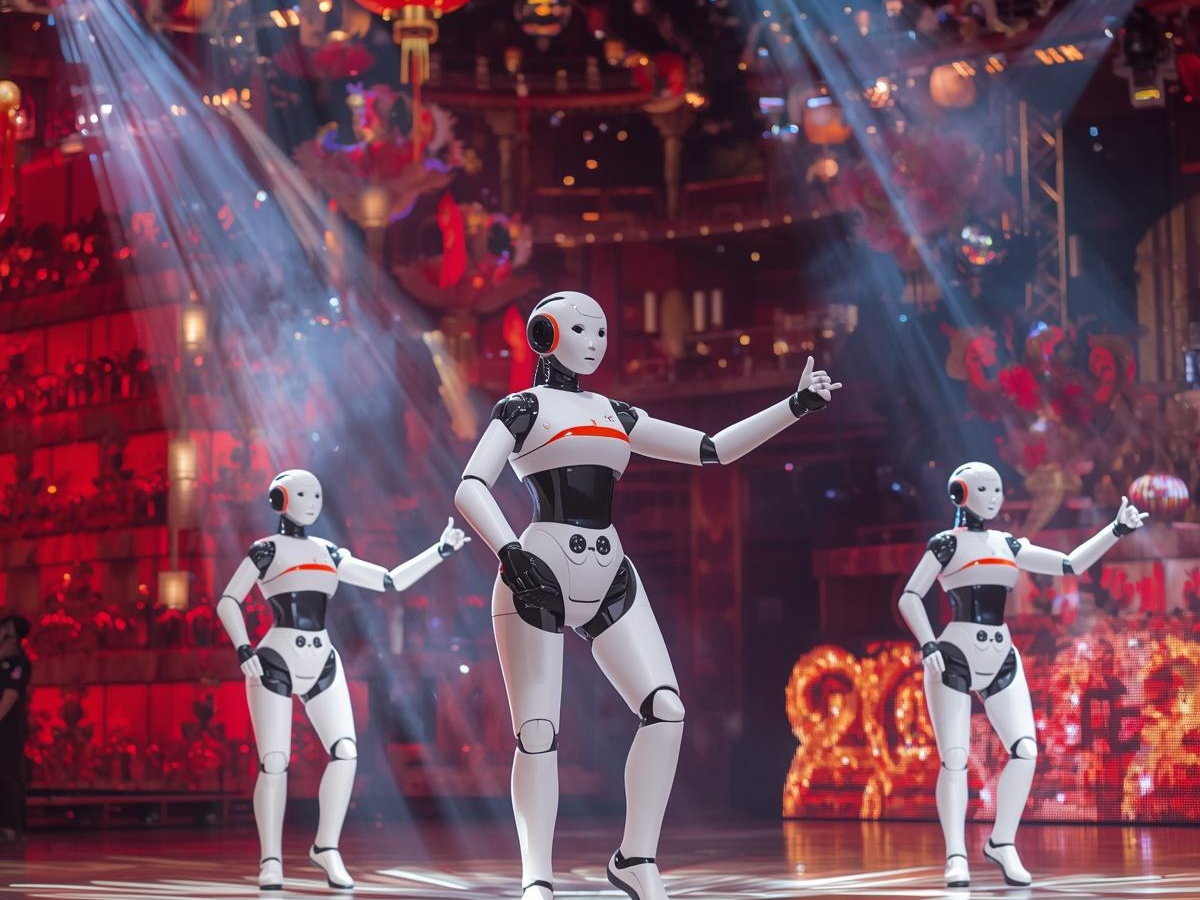
Image: Generated by Shadow Robot via Canva AI
The videos of sleek, silver robots walking, doing backflips, or making a cup of coffee in a controlled environment. The “Humanoid Era” is being marketed as the silver bullet for the global labor shortage. Morgan Stanley states that 90% of humanoids will be used for simple and repetitive work for industrial and commercial purposes by 2050.
Here’s the uncomfortable truth:
A humanoid robot capable of doing real, rugged, industrial work is at least a decade away.
Not because AI isn’t advancing fast enough, but because we’re underestimating one fundamental problem. There’s a huge “dexterity gap” between what robots can do and what we think they can do.
The Dexterity Gap
The biggest limitation in robotics today isn’t intelligence. It’s dexterity.
To put it simply, the dexterity gap is the massive difference between how easily a human can use their hands and how much a robot struggles to do the same. While robots are now amazing at big movements such as walking and lifting heavy crates, they are still surprisingly bad at small, precise movements.
Humans can thread a needle, peel a banana, or pick up an item effortlessly. Our brains and hands have evolved over millions of years to be incredibly versatile tools.
Now imagine doing those same tasks while wearing thick oven gloves. All of a sudden you’re missing the ability to make precise movements or feeling how much pressure to apply. This is the dexterity gap and the exact challenge many humanoids are facing.
Moravec’s Paradox
This challenge is neatly explained by Moravec’s Paradox, a long-standing principle in robotics and AI:
“High-level reasoning (like playing chess) requires very little computer power, but low-level sensorimotor skills (like walking or folding laundry) require enormous resources.”
In other words, robots find “hard” things easy and “easy” things hard.
Why Does This Gap Exist?
1. The Complexity of the Human Hand
The human hand is an engineering masterpiece. It has 27 bones and 34 muscles, all controlled by a massive network of nerves. It can switch instantly between power, precision, and delicacy.
Most robot hands, by contrast, are often either too simple (like claws or pincers) or too complex and bulky and fragile to be practical. They usually have only 2 or 3 fingers and are made of rigid metal or plastic.
The mechanics of replicating a human thumb’s opposable motion and finger articulation are incredibly difficult and expensive. To give a robot a human-like hand, you have to pack dozens of tiny motors into a very small space. These motors often overheat, break, or aren’t strong enough to match our natural grip.
2. The Sense of Touch
When you pick up a glass cup or grape, your brain instantly gauges weight, texture, and fragility and applies just enough pressure so it doesn’t fall, but not so much that it crushes.
Most robots don’t have “skin.” They rely on cameras to see an object, but they can’t “feel” if an object is slipping or about to break until it’s too late.
While tactile sensors exist, they still can’t match the sensitivity, speed, and adaptability of human skin. Humans adjust grip subconsciously, in milliseconds. Robots need explicit instructions, complex control loops, and still lag behind.
3. Deformable Objects
Humans are great at handling objects which change shape when you touch them such as dough. As the shape of dough can be changed in many different ways, dough is hard for a robot to handle. A robot’s brain has to constantly recalculate the object’s geometry in real-time. This requires an immense amount of processing power that we are only just beginning to develop with modern AI.
What Actually Matters
A robot that can walk into your facility or factory is impressive.
A robot that can reliably manipulate the specific objects your process depends on is transformative.
If robots are going to deliver real ROI in labs, manufacturing, logistics, healthcare, or energy, they must cross the dexterity gap first.
We aren’t here to sell you a generic, off-the-shelf humanoid. We focus on specialised dexterity. We are here to co-create the specific manipulation capabilities your industry has been missing.
Supported by the UK’s Advanced Research and Invention Agency (ARIA), we’re hosting a series of Dexterity Discovery Workshops for leaders in:
- Labs
- Factories
- Recycling
- Battery Disassembly
These aren’t demos. We won’t show you a video of a robot dancing. Instead, we’ll help you:
- Identify where dexterity is the real bottleneck in your automation roadmap
- De-risk investment by focusing on what’s achievable now, not what looks good in a headline
The humanoid hype is great for PR. Specialised dexterity is great for business.
Which one are you betting on?
Workshop Enquiries