Are Robots Taking Jobs?
Nov 17, 2026
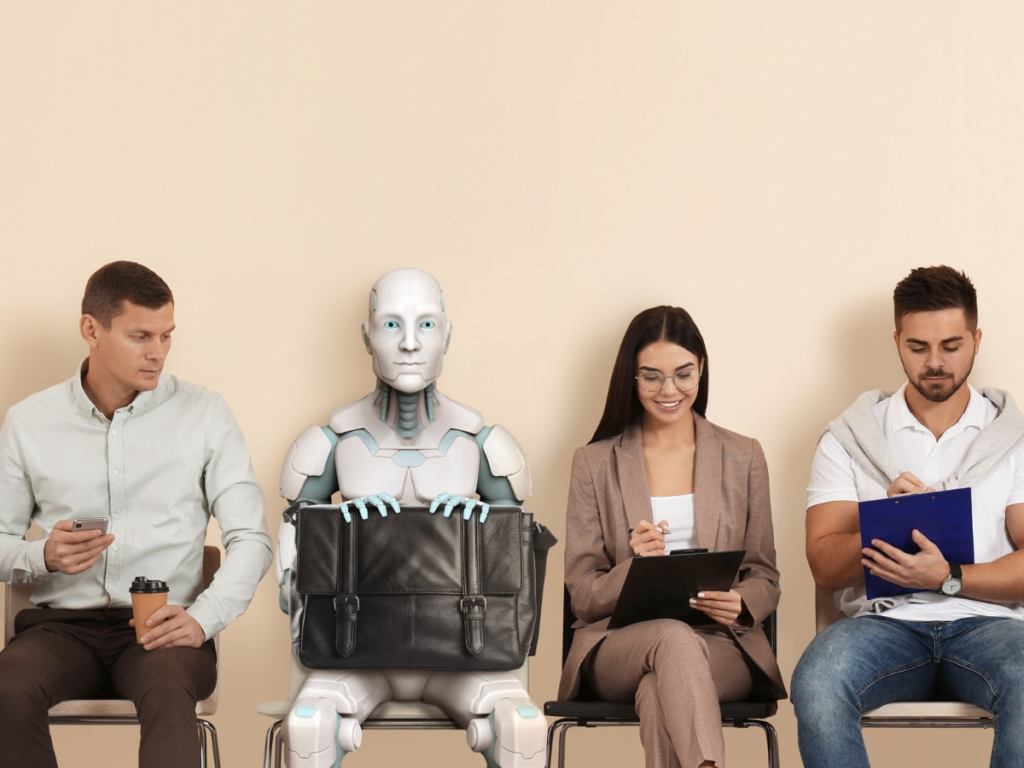
The concern that robots could take people’s jobs has been around for decades. As technology becomes more advanced, and robots become increasingly capable of carrying out tasks once performed by people, questions about the future of work continue to grow.
From manufacturing lines and warehouses to laboratories and hospitals, robots are becoming an increasingly common part of working life. Some can lift heavy objects, carry out repetitive tasks and operate in environments that may be difficult or unsafe for people.
But does this mean people are becoming less important in the workplace? And are robots really here to take our jobs?
The answer is not quite as straightforward as it might seem.
Robots are changing the way we work
Automation is not a new idea. Factories have used machines to increase production, improve consistency and make certain tasks easier for generations. What has changed is what those machines can do.
The growth of industrial robotics shows just how much the workplace is changing. According to the International Federation of Robotics, more than 600,000 industrial robots were installed worldwide in 2025, an 11% increase on the previous year. There are now approximately five million industrial robots operating in factories around the world.
Traditional industrial robots have generally been designed for specific, repetitive tasks. Think of a robotic arm on a car production line, welding the same part thousands of times. These machines are extremely effective, but they are usually designed to operate in controlled environments and follow carefully programmed instructions.
Today, advances in robotics, artificial intelligence and sensing are making it possible for robots to take on more varied tasks. They are becoming better at recognising objects, responding to their surroundings and handling things with greater precision.
This opens up possibilities in industries where automation has traditionally been more difficult, including laboratory work, manufacturing, logistics and healthcare. It also means that some tasks currently carried out by people could eventually be automated.
Will robots replace human workers?
Some jobs will change, and some roles may become less necessary as machines take on more of the work.
This is not the first time technology has changed the way people work. The internet transformed offices, email changed business communication and software automated tasks that once required hours of manual work. Robotics is another step in that ongoing evolution, although its ability to interact with the physical world introduces a different set of challenges.
Repetitive, physically demanding and predictable tasks are often among the first considered for automation. However, there is an important distinction between automating a task and replacing an entire job.
Most jobs involve a combination of different activities. Someone working in manufacturing, for example, might spend part of their day operating equipment, checking products, handling materials, solving problems and responding to unexpected situations.
A robot might be able to take over some of these activities, but that does not necessarily mean it can do everything involved in the role.
Interestingly, research into UK manufacturing challenges the idea that automation always leads to fewer employees. A 2025 study examining manufacturing businesses between 2005 and 2023 found that businesses adopting industrial robots or computer numerical control (CNC) machine tools for the first time experienced employment increases of between 6% and 9%, compared with similar businesses that had not adopted these technologies.
This does not mean automation never results in job losses. However, it shows that the relationship between technology and employment is more complicated than simply replacing people with machines. Businesses that invest in automation may also expand production, increase their capacity and need people to take on other responsibilities.
In many workplaces, the future may involve people and robots sharing responsibilities. Machines can handle certain repetitive or physically demanding activities, while people focus on decision-making, problem-solving, supervision and tasks that require flexibility and experience.
Of course, this transition will not look the same in every industry. Businesses will need to consider how automation affects their employees, what new skills are required and how workers can be supported as roles evolve.
What does the research tell us?
The debate around automation is not just speculation. Research suggests that technology will have a significant impact on employment over the coming years, although the picture is not entirely straightforward.
The World Economic Forum’s Future of Jobs Report 2025 estimates that global labour market changes could create 170 million new jobs and displace 92 million existing jobs by 2030. This represents a projected net increase of 78 million jobs.
The report considers several factors behind these changes, including technological developments, economic conditions, demographic shifts and the green transition. Robotics and autonomous systems are among the technologies expected to contribute to job displacement, but they represent only one part of a much wider transformation in the global workforce.
At the same time, the growth of automation is creating demand for new skills and responsibilities. Businesses need robotics engineers, maintenance specialists, software developers and automation operators to develop, manage and maintain these systems. Other existing roles will also evolve as employees take on responsibilities involving automated equipment, monitoring and supervision.
These figures highlight the scale of the changes expected across the global workforce. While some roles will disappear, others will evolve and entirely new opportunities will emerge.
The challenge is making sure people have the opportunity to adapt alongside these changes.
Why people are still essential
One of the things that makes people difficult to replace is our ability to adapt naturally. We can pick up unfamiliar objects, adjust our grip without thinking, recognise when something feels wrong and respond to changes around us. Much of this happens without us even realising it.
Consider a simple task such as picking up a fragile glass object. A person instinctively adjusts how firmly they hold it, using touch to avoid dropping or damaging it.
For a robot, this can be surprisingly difficult.
Robots have traditionally relied heavily on cameras and pre-programmed movements to understand and interact with objects. But seeing something is not the same as being able to handle it. Knowing how much force to apply, recognising when an object is slipping and adjusting movements accordingly are all important parts of successful manipulation.
Developing robots that can handle objects more like people do could allow them to take on a wider range of practical tasks. It could also make it easier to introduce automation into environments where processes are too varied or delicate for conventional machines.
Making robots more capable does not make human judgement, creativity or experience any less valuable. These qualities remain important, particularly when dealing with situations that require decision-making and an understanding of the wider context.
The work we don’t always think about
When people imagine robots taking jobs, they often picture a machine replacing a factory worker. There is another side to the conversation that receives less attention.
Many industries also face challenges finding enough people to carry out certain types of work. Some tasks are physically demanding, repetitive or involve working in uncomfortable environments. Others require people to spend hours carrying out the same precise movements.
In laboratories, for example, researchers and technicians can spend considerable time preparing samples, handling containers and carrying out routine procedures. In manufacturing, workers may be responsible for repetitive assembly tasks that require accuracy and consistency. These activities are important, but they can also take time away from other responsibilities that require human knowledge and expertise.
Robots could help take on some of this work, allowing people to spend more time on activities where their skills make the greatest difference.
There are also environments where reducing human exposure to certain conditions could be beneficial, including those involving hazardous materials or demanding physical conditions.
This is not about suggesting that people should simply be removed from these workplaces. It is about considering where machines could make working environments safer, more productive and less physically demanding.
A future built around people and robots working together
The success of robotics should not just be measured by how much work machines can do without people. It should also be measured by how useful they are to the people working alongside them.
For businesses, this means looking beyond automation for its own sake. Introducing a robot should solve a real problem, whether that is improving consistency, reducing physically demanding work, addressing labour shortages or making previously difficult processes easier to automate.
It also means recognising that robots need to become more adaptable.
Many existing robotic systems work well when everything is predictable. But real working environments are rarely that simple. Objects move, materials vary and unexpected situations arise. People deal with these changes naturally. Robots need to become better at doing the same.
At Shadow Robot, we are working to address some of these challenges through the development of dexterous robotic hands that help robots interact with the physical world. Our work combines advanced movement with tactile sensing to help robots interact with objects, detect contact and gain greater control during manipulation.
This matters because many everyday tasks require more than simply moving an object from one place to another. Handling delicate components, assembling different parts or working with unfamiliar objects requires a level of control and adaptability that conventional automation can struggle with.
By advancing robotic dexterity and touch, we are working towards a future where robots can take on a wider range of practical tasks and support people in environments where automation has traditionally been difficult.
So, are robots taking jobs?
The honest answer is that some jobs will be affected by robotics, and some will inevitably change or disappear. Pretending otherwise would ignore the impact that technology is already having on the workplace.
But looking at robotics purely as a threat to employment misses a much bigger opportunity.
Robots can take on tasks that are repetitive, physically demanding or difficult to carry out consistently. They can help businesses overcome challenges, support workers and make certain types of work possible that would otherwise be impractical.
People will continue to play an important role in designing, developing, managing and working alongside these technologies. As robotics continues to advance, the skills people bring to the workplace will evolve too.
Perhaps the more important question is not whether robots will take our jobs, but how we choose to use them.
The future of robotics should be about creating better ways to work, making workplaces safer and allowing people to focus on the things they do best.