ERF 2026: Resilience, Virality & Robots for Good
Apr 16, 2026
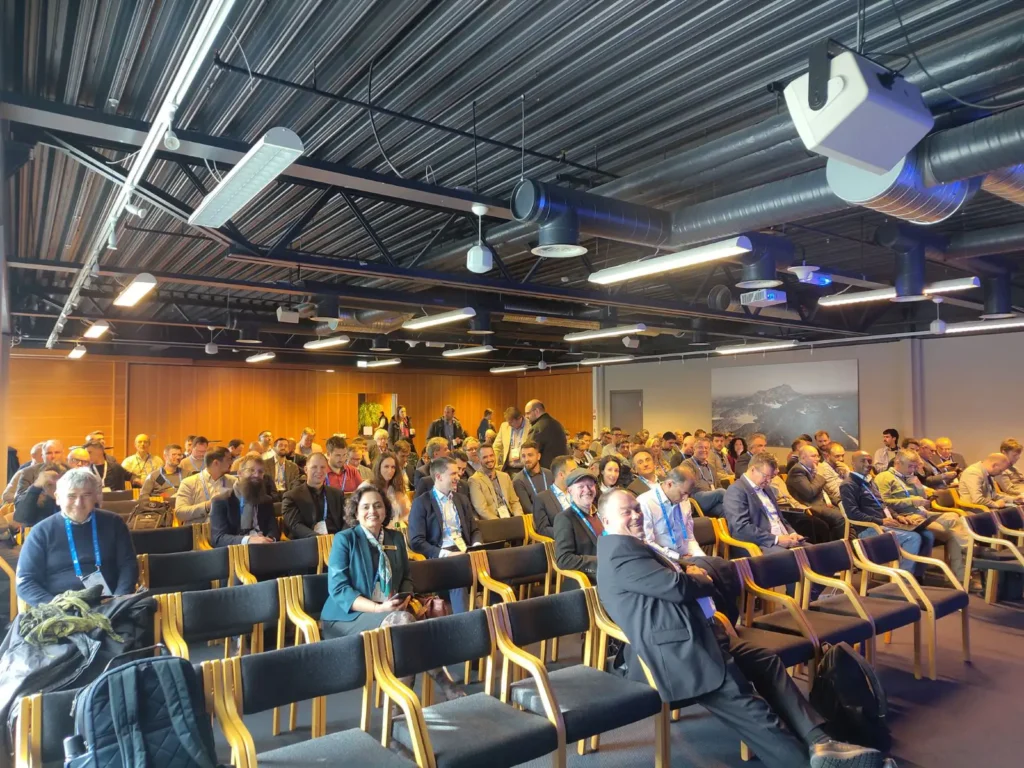
Another European Robotics Forum is in the books, and I think I just finished processing the sheer volume of coffee, chilli chocolates, and high-level robotics strategy consumed over the last few days.
ERF is always a bit of a whirlwind, but this year felt particularly pointed. We’ve moved past the “look at this cool arm” phase and deep into the “how does this actually change the world?” phase. Here’s how it all went down from my corner of the room.
The Changing of the Guard
We kicked off Monday with a lively lunch meeting for the Members attending the General Assembly. It’s always great to see the European Roboticists gather. There was some fascinating deep research discussions, particularly around agritech and about new ways to teach people about robotics (in university) where the robots use natural language interfaces.
Then came the serious business: the euRobotics General Assembly itself. Rainer Bischoff and Juha Röning (our Vice Presidents) took us through the last year and the organisational matters, followed by a very lively discussion on budgets and how we grow this ecosystem. Then the big news: The torch has officially passed. Our President since the founding of the Association, Bernd Liepert, has stepped down – huge thanks to him for his leadership, and a massive welcome to our new President, Francesco Ferro from PAL Robotics. The board elections are in, the results are good, and the community feels energized.
Building for a Less Certain Future
By Tuesday, the theme of the week started to crystallize: Resilience. We spent a lot of time discussing the global situation. Climate change, system shocks, and the general “uncertainty” of the future. The big question is: How do we build a Europe that can bounce back faster? Whether it’s restoring infrastructure after an accident or rebuilding after a disaster, robotics is the key to that speed.
I co-hosted the Topic Group Coordinators lunch with José Saenz from Fraunhofer IFF (ok, to be fair José hosted the lunch, I just made a lot of noise). It’s the grassroots innovators in these groups who are going to actually build these solutions, so getting them aligned on “resilience” is vital.
Of course, it wasn’t all high-level policy. I spent a good chunk of time in the Mechatronics workshop arguing (in the best possible way) about actuation and sensing with Zaki Hussein (Touchlab), Giorgio Cannata (University of Genoa), Werner Friedl (DLR), and Guggi Kofod (Pliantics). There’s nothing like a room full of experts debating the finer points of hardware to remind you why you love this industry.
The “Viral” Robotics & Circular Economy
Wednesday started… slowly for some. The reception the night before featured “drunken robots” (don’t ask), but we were up early for Workshop #22 on the policy landscape. We had a frank look at what works and what doesn’t. Pro-tip for policymakers: if your funding rules are so complex that they limit participation, you’re not “supporting innovation” – you’re just feeding the paperwork experts.
After lunch, Workshop#45 took a look at the “Viral Demo” phenomenon. I joined Fabio Bonsignorio (U. Zagreb) and a panel of junior researchers
– Hala Elrofai (moderator), Eindhoven University of Technology (organised the workshop)
– Wouter Kuijpers (panelist), Eindhoven University of Technology
– Rich Walker (panelist), Shadow Robot Company
– Carlos Calleja (panelist), IKERLAN
– Shirley Elprama (panelist), imec‐SMIT & Vrije Universiteit Brussel
to explore why there is such a disconnect between the amazing robots we see on YouTube and the few we see actually deployed in the wild. It’s an interesting challenge for the sector; the public sees these polished clips and assumes the tech is “solved.” The audience kept us on our toes regarding the hard work required to move from a “cool video” to a reliable, repeatable deployment that works in the real world.
I wrapped up the day looking at Circular Economy and disassembly. Sustainability isn’t just a buzzword; it’s a resource security issue. Did you know only 1% of rare earth magnets are currently recycled? This is a major critical minerals challenge for us!
If we want a resilient Europe, maybe we need robots that can take things apart just as well as – or even better than! – we put them together.
AI & Feedback
By Thursday morning, the European Commission delegates had the unenviable task of presenting the “Apply AI” strategy to a room full of people who had just survived the Gala Dinner. It’s a bold plan (the Apply AI strategy, not “surviving the Gala dinner”) – investing heavily to ensure AI adoption fits the “European model.” Good luck to them; we need that bridge between AI research and physical robotics to be as short as possible.
We closed, as is tradition, with the Feedback Session. We do this in person because we actually care about the “what could we do better?” discussion. The most common complaint? “Why are there so many parallel workshops?” My answer remains the same: Because you all won’t stop submitting such excellent proposals!
Final Thoughts & Thank you
ERF works because it’s compact. It’s the kind of place where you can ask, “Have you seen X?” and have them say “Yes, they are just over there!” while pointing to a person 5 feet away. It does wonderful things for the speed of connecting and networking!
A special shout-out to ARIA for the Tuesday night “soiree.” Magnus from Roboxi gave a brilliant talk on their journey to airport deployment. The Q&A had the best question: “Magnus, you’ve explained how you built the business and why the customer values it, but you haven’t explained what the robots do yet!” A completely different perspective for us technologists.
Next year, we’re heading to Birmingham. If you’ve never been to an ERF, you really should give it a try. See you in the UK!