When Does a Tool Become a Teammate in Robotics?
May 18, 2026
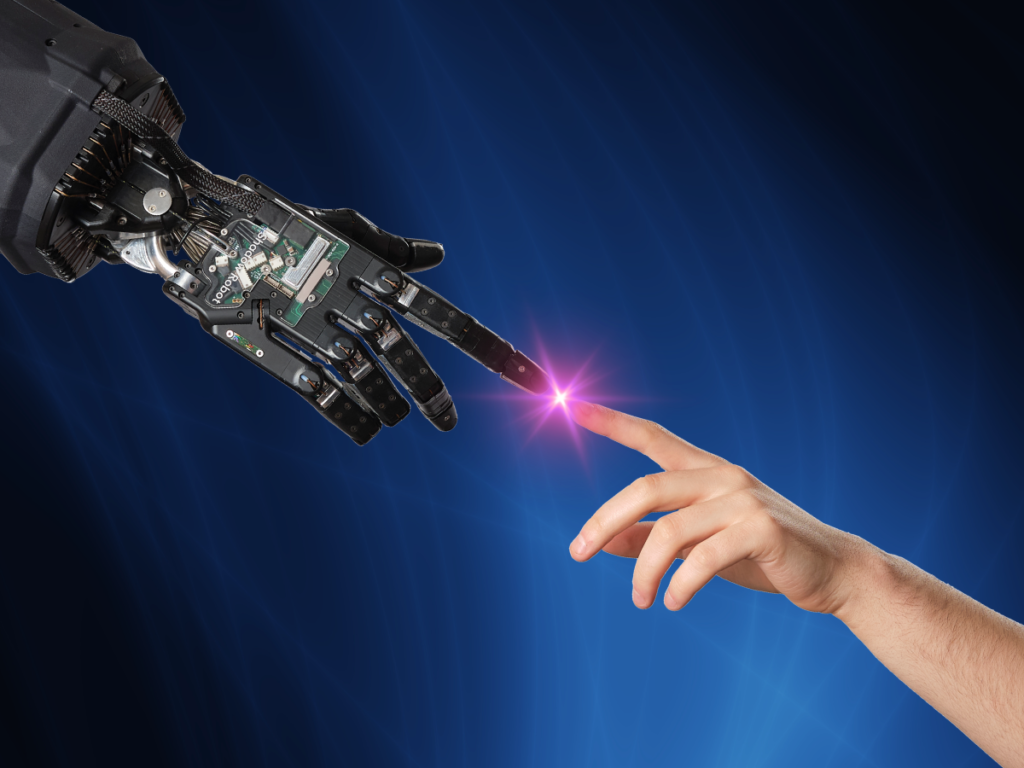
At what point does a tool stop feeling like a tool and becomes a teammate in robotics?
Most of us are used to drawing a clear line. A hammer is a tool. A microwave is a tool. Even a highly advanced machine is still, in our minds, something we operate, not something we work with.
But as we push the boundaries of dexterous manipulation and tactile feedback, that line is starting to blur.
In robotics and embodied systems, especially in dexterous manipulation and teleoperation, we’re starting to build machines that don’t just extend human capability, they participate in it.
And that raises a simple but important question: When does a tool become a teammate?
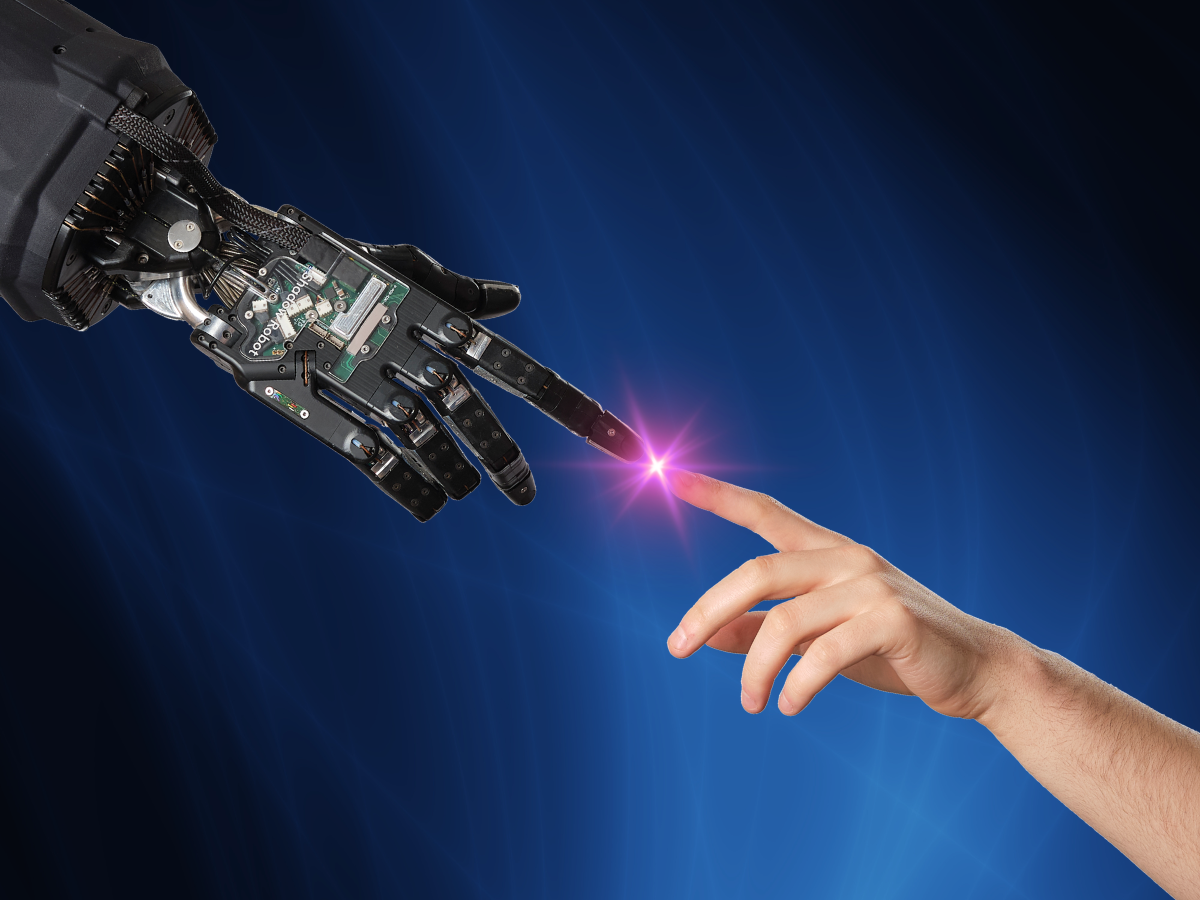
A Tool vs A Teammate
A tool is something you control. It does what you tell it to do, within limits. You remain fully in charge.
A teammate is different. A teammate:
- reacts to what you do
- adapts to changing conditions
- shares the effort of solving a problem
- sometimes even surprises you
With a hammer, you decide everything.
With a GPS, you still decide where to go but you might change your route based on its suggestions.
With a co-pilot, you start to share decisions in real time.
Robotics sits somewhere along this spectrum, and it’s moving steadily toward the middle.
The moment of “shared control”
One of the clearest signs that something is shifting from tool to teammate is shared control.
In traditional automation, the machine executes a fixed task. Most industrial robots are still in what you might call the “toaster phase”: highly reliable at repeating predefined actions, but unaware of broader intent. If they fail, it is a mechanical issue, not a contextual one.
In more advanced robotic systems and teleoperation platforms, control becomes collaborative.
For example:
- A human sets intent (“pick up that object”)
- The system manages low-level precision
- The human steps in when judgment is required
Neither side is fully in charge of every detail. This is where things start to feel different.
You’re no longer just using the system. You’re working with it.
Trust is the real turning point
A tool is silent. It does not respond in meaningful ways. Modern robotic systems are different. Force feedback influences how you move. Tactile signals guide decisions. Visual and motion responses create a rhythm of interaction. Over time, something interesting happens: you begin to anticipate the system, and the system becomes more predictable to you. The interaction becomes coordinated rather than purely mechanical.
The biggest difference between a tool and a teammate isn’t intelligence. It’s trust.
You trust a tool to do exactly what you instruct it to do. You trust a teammate to handle uncertainty, recover from mistakes without breaking the task, and flag problems you might miss.
In robotics, trust develops slowly. It comes from repetition, reliability, and consistent behavior under pressure. But once it is established, something changes. Operators stop micromanaging and start delegating intent instead of individual steps.
But it is still not a human.
Robots are not teammates in the human sense. They do not understand context, emotion, or responsibility. What changes is not what the machine is, but how the human interacts with it.
The “teammate effect” is really a reflection of better feedback loops, improved responsiveness, more intuitive control systems, and reduced cognitive load on the operator. In other words, the system starts to support human decision-making more naturally.
This has real implications for how quickly operators can be trained, how complex tasks can become, how safely humans can work in high-risk environments, and how far automation can realistically go today. In many real-world settings, full autonomy is still out of reach. But collaboration between humans and machines is already delivering value. And in those systems, success does not come from replacing humans. It comes from building better partnerships.
The direction we’re heading
The future of robotics is not a clean switch from “manual” to “fully autonomous.” It is a gradual shift toward systems that understand intent more effectively, respond more intelligently to human input, reduce friction between thought and action, and share responsibility for outcomes.
As that interaction becomes more seamless, it becomes more natural to treat a system not just as a tool, but as a collaborator in the task
Not because it thinks like us.
But because it works with us.
Workshop Enquiries